
Call notices and call-us numbers
The notices that tell you to call, and what triggers them.
Aevora Reporter cannot tell how serious anything is, and does not try. What it can do is remind you to call when you mark something that care teams ask to hear about straight away.
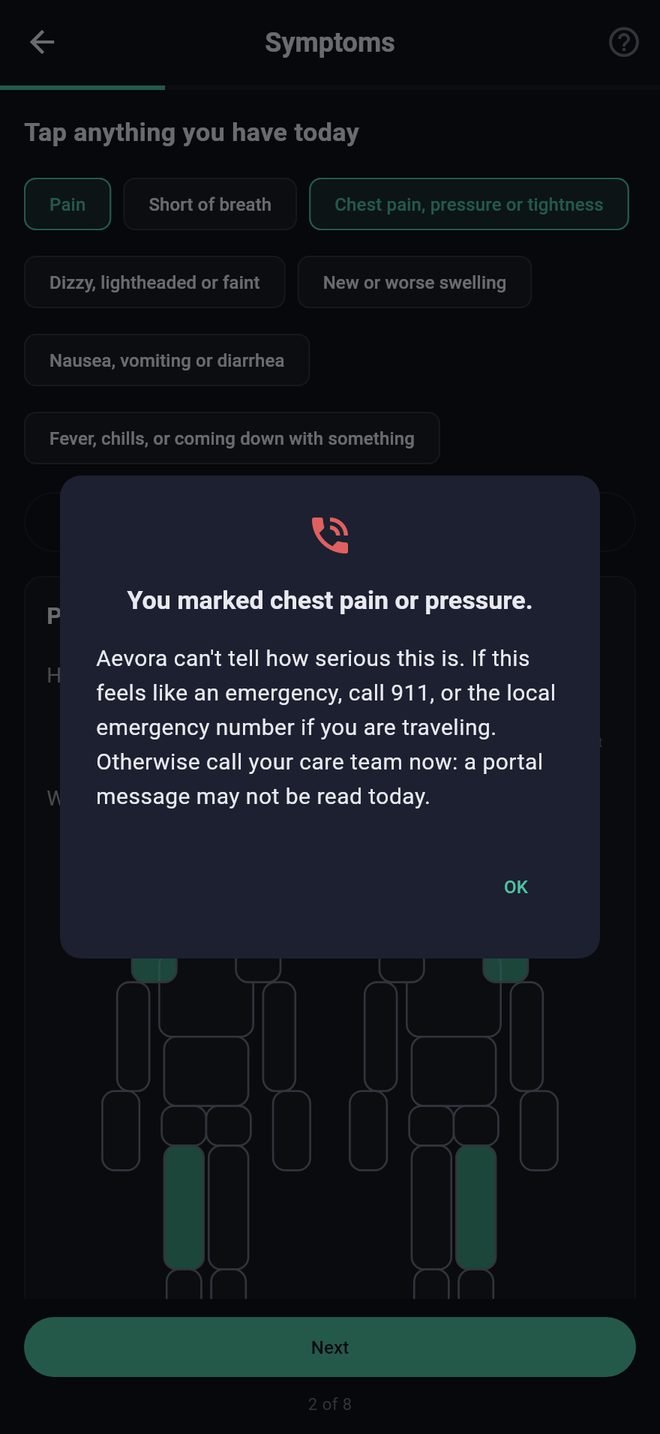
Notices from your answers
Marking any of these in the Daily Check shows a notice at once:
- chest pain, pressure or tightness
- passing out
- blood in your stool, or black stools
- confusion or unusual sleepiness
- a joint that is still out of place
- new numbness or weakness
- the worst or most sudden headache of your life
- a device alert, or feeling a shock
- throat swelling, trouble breathing, or using epinephrine
The notice always says the same thing: if this feels like an emergency, call the emergency number; otherwise call your care team now, because a portal message may not be read today.
The number in the notice is the one for the region your phone is set to: 000 in Australia, 111 in New Zealand, 112 across Europe and in India, 911 in the United States, Canada and Mexico, 999 in the United Kingdom. Where the app is not sure of the number, it says "your local emergency number" instead of guessing.
The app does not know where you are, only how your phone is set, so the notice also reminds you to use the local emergency number if you are traveling.
Notices from your readings
If you entered call-us numbers in Check-In setup, the app compares today's readings with them each time you open Check-In. When a reading is past one, you see the same kind of notice and a red banner listing which reading and which number, in the units you chose in Settings.
The app compares; it does not judge. A reading inside your numbers is not a statement that you are well.
In your Care Packet
A packet says which notices you were shown, and marks any reading past a call-us number with an exclamation mark, so your team sees it first.
No notice does not mean no problem. If you are worried, call.
Call notices and call-us numbers
The notices that tell you to call, and what triggers them.
Aevora Reporter cannot tell how serious anything is, and does not try. What it can do is remind you to call when you mark something that care teams ask to hear about straight away.
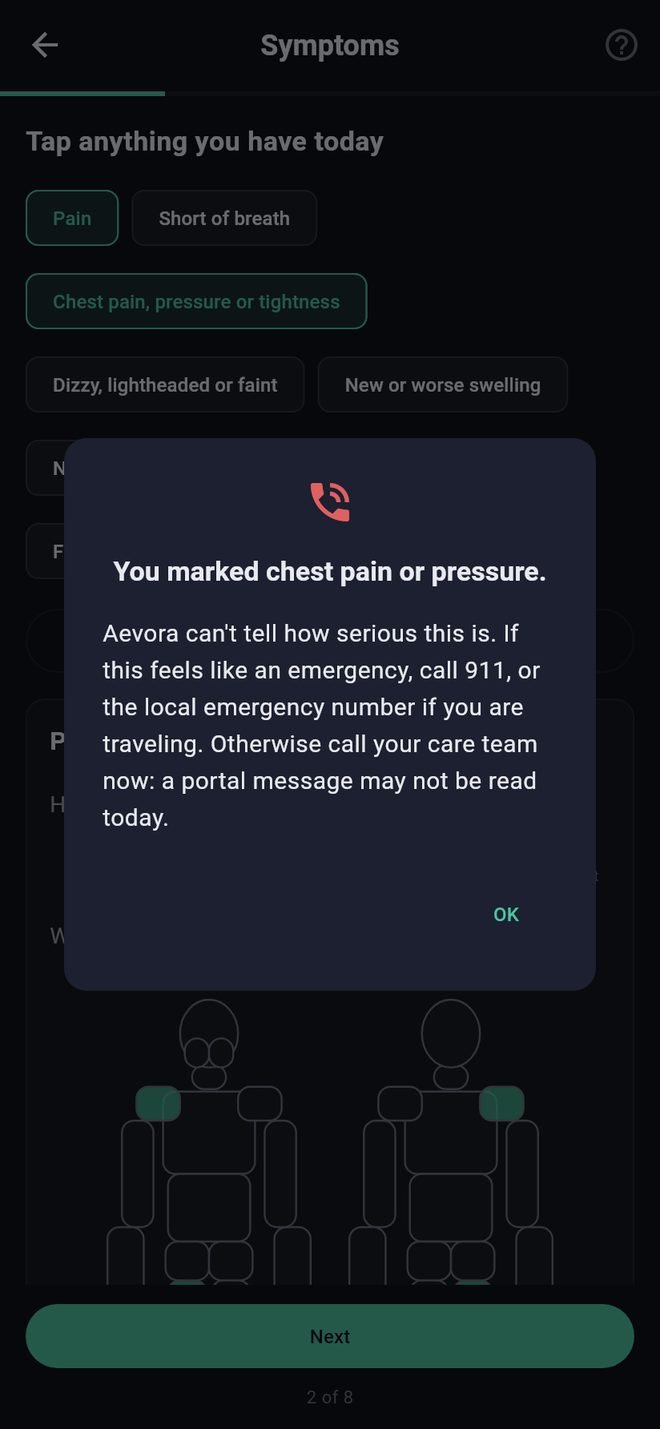
Notices from your answers
Marking any of these in the Daily Check shows a notice at once:
- chest pain, pressure or tightness
- passing out
- blood in your stool, or black stools
- confusion or unusual sleepiness
- a joint that is still out of place
- new numbness or weakness
- the worst or most sudden headache of your life
- a device alert, or feeling a shock
- throat swelling, trouble breathing, or using epinephrine
The notice always says the same thing: if this feels like an emergency, call the emergency number; otherwise call your care team now, because a portal message may not be read today.
The number in the notice is the one for the region your phone is set to: 000 in Australia, 111 in New Zealand, 112 across Europe and in India, 911 in the United States, Canada and Mexico, 999 in the United Kingdom. Where the app is not sure of the number, it says "your local emergency number" instead of guessing.
The app does not know where you are, only how your phone is set, so the notice also reminds you to use the local emergency number if you are traveling.
Notices from your readings
If you entered call-us numbers in Check-In setup, the app compares today's readings with them each time you open Check-In. When a reading is past one, you see the same kind of notice and a red banner listing which reading and which number, in the units you chose in Settings.
The app compares; it does not judge. A reading inside your numbers is not a statement that you are well.
In your Care Packet
A packet says which notices you were shown, and marks any reading past a call-us number with an exclamation mark, so your team sees it first.
No notice does not mean no problem. If you are worried, call.